|
Kingdom of England |
|
|
| 1674: |
The Irish Regiment
Viscount Clare’s
│ |
| 1675: |
in Dutch service
Regiment Engelsen Clare
│ |
| 1676: |
Regiment Engelsen Fenwick
│ |
| 1676: |
Regiment Engelsen Wisely
│ |
| 1680: |
Regiment Engelsen Monck
│ |
| 1688: |
to the English Establishment
Thomas Tollemache’s
Regiment of Foot
│ |
| 1689: |
Edward Lloyd’s
│ |
| 1694: |
Thomas Fairfax’s
│ |
| 1704: |
Thomas Pearce’s
│ |
| 1707: |
Kingdom of Great Britain |
|
│ |
| 1732: |
Sir John Cope’s
│ |
| 1737: |
Alexander Irwin’s
│ |
| 1742: |
ranked as 5th Foot
│ |
| 1751: |
5th Regiment of Foot
│ |
|
│

│ |
| 1782: |
5th (Northumberland)
Regiment of Foot
│ |
| 1799: |
2nd Battalion raised
│ |
| 1801: |
United Kingdom of Great Britain and Ireland |
|
│ |
| 1802: |
2nd Battalion disbanded
│ |
| 1804: |
2nd Battalion raised
│ |
| 1816: |
2nd Battalion disbanded
│ |
| 1836: |
5th (Northumberland)
Regiment of Fusiliers
│ |
| 1857: |
2nd Battalion raised
│ |
|
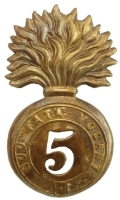
│ |
|
The creation of the territorial regiments by the Childers reforms |
|
│ |
|
 |
| 1881: |
1st Battalion, 2nd Battalion, |
|
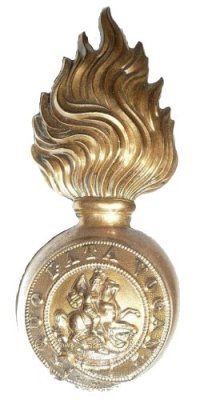
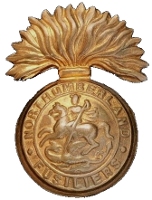
The Northumberland Fusiliers
|
|
│ |
|
│ |
| 1900: |
3rd Battalion and 4th Battalion raised
│ |
| 1907: |
3rd Battalion and 4th Battalion disbanded
│ |
| 1922: |
United Kingdom of Great Britain and Northern Ireland |
|
│ |
| 1935: |
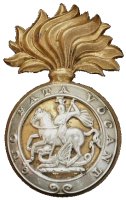
The Royal Northumberland Fusiliers |
|
│ |
| 1948: |
2nd Battalion disbanded
│ |
| 1948: |
part of
The Yorkshire and Northumberland Brigade |
│ |
| 1958: |
│ |
|
│ |
| 1968: |
1st Battalion,
The Royal Regiment of Fusiliers |
|
part of
The Queen’s Division |
│ |